March 10, 2026 · Dario Mathias
Balance and Fall Prevention for Older Adults in Tampa
A bad fall can change everything as we age. The good news from 22 years of coaching: balance is trainable. Here is what actually reduces the risk.
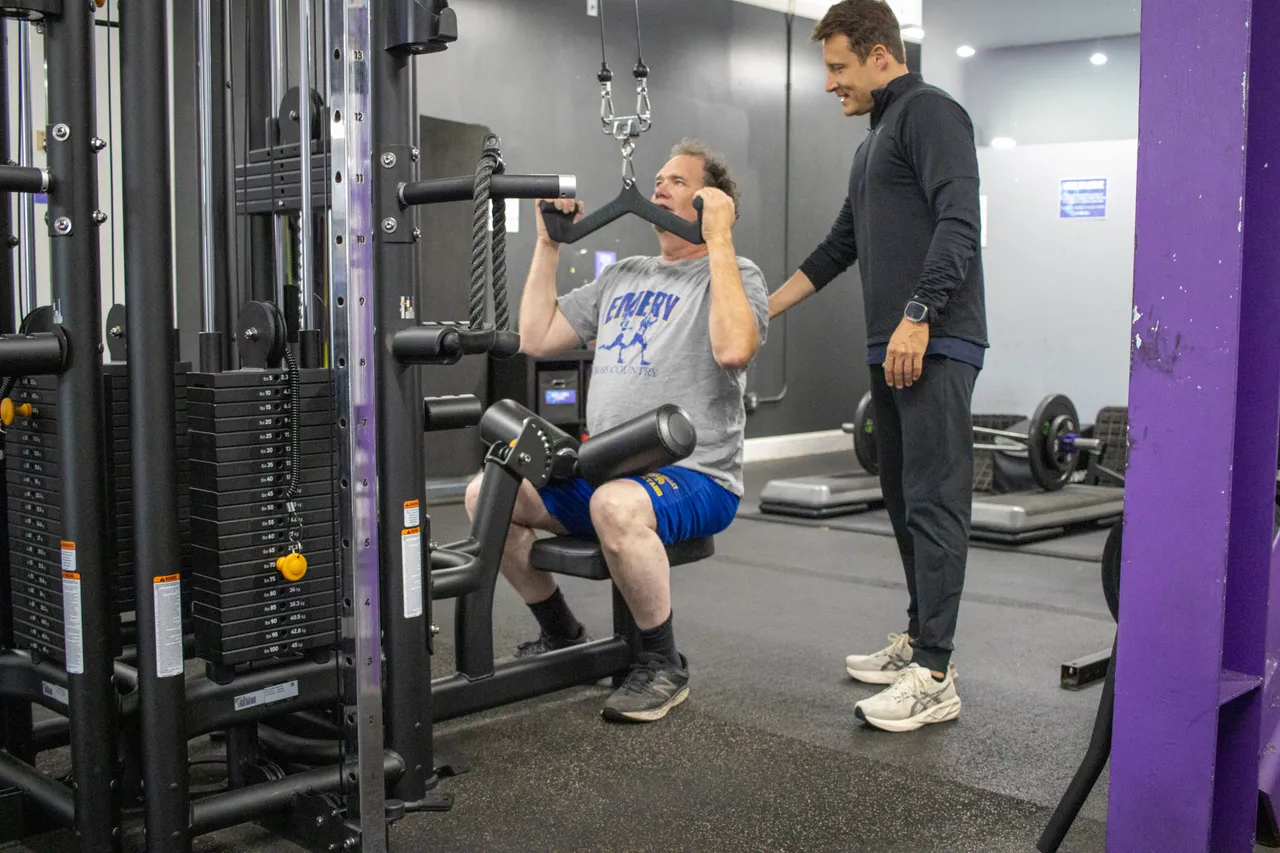
In 22 years of training people, the conversation I have most often with older adults and their families is about balance. Not biceps, not the scale. Balance. And it usually starts after a scare: a near miss in the kitchen, a stumble off a curb, a moment where someone caught themselves on the counter and thought, that was close.
I would rather we have that conversation before the scare. Falls are one of the leading causes of serious injury for older adults, and a single bad fall can change everything. A broken hip, a fear of moving, a slow loss of independence. The good news, and I mean this from real experience in the gym and in people’s homes, is that balance is trainable. It is not a fixed trait you are stuck with. It responds to the right work, done consistently, under close supervision.
Why Falls Get More Serious as We Age
A fall at 35 is usually a bruised ego. A fall at 75 can be a turning point. A few things stack up as we get older. Muscle, especially in the legs and hips, declines if we do not actively work to keep it. Reaction time slows, so when you start to tip, your body is a beat behind in catching you. Vision changes, inner ear changes, and some medications affect steadiness too. Then there is the part nobody talks about enough: after one fall, people start moving less because they are afraid of the next one. Less movement means weaker legs and worse balance, which makes another fall more likely. It becomes a quiet cycle that compounds.
I see this pattern regularly. The person is not unsteady because they are old. They became less steady because they stopped challenging their balance, and the body let go of what it was not using.
What Actually Reduces the Risk
Here is the part that gives me hope every single week. The right training works. When we build leg and hip strength and deliberately train balance, people get steadier. They walk with more confidence. They stop gripping the railing. I have watched clients go from moving carefully across a room to moving through it without a second thought.
A good program for fall prevention is not complicated, but it has to be specific. In my sessions it usually includes:
- Lower body strength work: sit-to-stands, step-ups, and controlled squats, all scaled to the person
- Balance training that is gradually made harder, from standing steady to single-leg work to controlled reaching
- Hip and core strength, because that is what catches you when you start to lose your footing
- Walking mechanics and reaction drills, so the body learns to respond when something unexpected happens
We start where you actually are, not where a textbook says a person your age should be. Some clients begin holding the back of a sturdy chair. That is completely fine. The goal is steady, honest progress, not impressing anyone.
Why Hands-On Coaching Matters for Balance Work
I want to be clear about this, because it matters. Balance training works best when I can be right next to you, and that hands-on coaching is exactly how I work with my clients across the Tampa Bay Area.
The whole point of balance training is to push you to the edge of your stability so your body adapts. That edge is exactly where a fall can happen. So I am standing right there, hands ready, watching your hips, your knees, your face. I check blood pressure when it is warranted, I watch for warning signs, and I adjust the moment something looks off. For clients who want to keep training between our sessions, or who cannot always meet in person, I offer online coaching too, and we decide together what is safe and smart for you. This work is also personal for me. My own father had a stroke, and that shaped how seriously I take protecting the people I train.
I also train alongside your medical goals, not against them. If you have a doctor managing your heart, your blood pressure, your diabetes, or a condition like Parkinson’s, we work as part of that picture, carefully and on the same page.
A Few Words for the Adult Children Reading This
If you are arranging training for an aging parent, you are doing the right thing by getting ahead of it. The best gift you can give is more years of moving on their own terms: in and out of the car, up the steps, around the grandkids, without that constant low hum of worry in the background.
If any of this sounds like you or someone you love, I would be glad to talk it through. You can book a free intro call and we will figure out, together, the safest and smartest place to start. Staying steady on your feet is one of the most worthwhile things you can train for, and you do not have to do it alone.
Ready to train with Dario?
Book a free intro call and tell me your goals, or call me directly. We will find the right fit for you.