August 4, 2026 · Dario Mathias
Five Things You Should Still Be Able to Do at 70 (Try These at Home)
Five simple self-tests for strength, balance, and mobility after 70. What good looks like, what a low score is telling you, and how to fix each one.
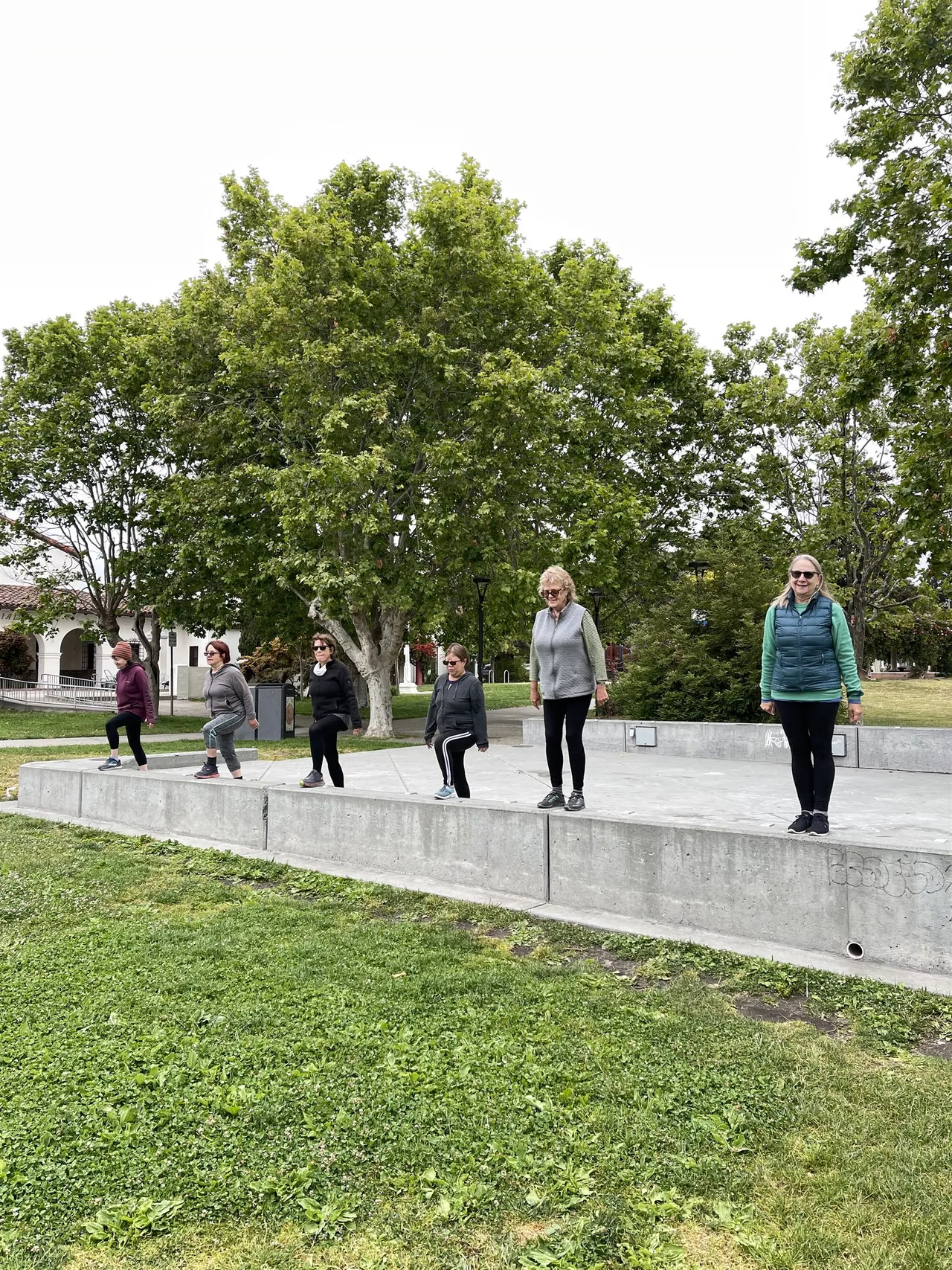
Most people find out they have lost strength the hard way. A fall in the driveway, a trip to the hospital, a doctor using the word frailty for the first time. By then you are reacting instead of preventing.
You do not have to wait for that. There are a handful of simple things you can check at home, in about ten minutes, that tell you a lot about where your body actually stands. I use versions of these with new clients on day one, because they cut through what someone thinks they can do and show me what they can do.
Before you start, a few ground rules. Have someone with you, or at minimum stay within arm’s reach of a sturdy counter or chair. Wear real shoes, not socks. Skip any test that feels unsafe today, and stop immediately if you get chest pain, sharp joint pain, or feel dizzy or lightheaded. Nothing here is worth an injury. These are checks, not challenges.
1. Stand Up From a Chair, Repeatedly
Sit in a firm chair with your arms crossed over your chest. Stand all the way up and sit all the way down as many times as you can in 30 seconds, without using your hands.
Somewhere around 12 or more is a good showing in your early 70s. Under 10 is a signal worth paying attention to, and needing your hands at all tells you plenty on its own.
This one matters more than any other test on the list. Every chair, toilet, and car seat you use runs on this exact pattern, and it is usually the first thing to go.
The fix: sit-to-stands, done daily. Use a higher chair or a cushion if the full range is too much right now, and lower the height as you get stronger. Progress to holding a light weight at your chest.
2. Get Down to the Floor and Back Up
Get down to the floor and then get back up. That is the whole test. Take as long as you like and use whatever route works.
What I am watching for is not speed, it is whether you have a plan and whether you need furniture to pull on. Getting up unassisted, even slowly, is a good result. Being unable to do it at all is the single strongest predictor I know for losing independence, because a fall you cannot recover from turns a stumble into hours on the floor waiting for help.
Do this one with someone else present the first time.
The fix: practice it. Genuinely. Half-kneeling drills, getting up through a kneeling position, and gradually taking away the hand support. It is a skill as much as it is strength, and it comes back with rehearsal.
3. Stand on One Leg
Near a counter, without holding on, lift one foot a few inches off the floor and hold. Time it. Then switch sides.
Ten seconds per side is the number I care about most after 70. Thirty seconds is strong. A noticeable difference between your left and right side is worth flagging too, because that asymmetry often shows up before a fall does.
Balance is not a fixed trait you either have or lost. It is trainable at any age, and it responds fast, often within a few weeks.
The fix: practice at the kitchen counter while the coffee brews. Fingertips on the counter at first, then one finger, then nothing. Once that is easy, try it with your head turning side to side, which is closer to what real life demands.
4. Carry Something Heavy Across the Room
Pick up a weight in each hand, a gallon of water, a loaded grocery bag, a dumbbell, and walk with it. Down the hallway and back, standing tall, without setting it down.
If your shoulders round forward, your grip gives out first, or you need two trips for a normal load of groceries, that is your answer.
Grip and carrying strength track closely with overall strength and general health, and they show up in daily life constantly: laundry, luggage, groceries, a grandchild.
The fix: farmer’s carries. Pick up something moderately heavy, walk 30 to 40 feet, set it down, repeat a few times. It is the least complicated exercise there is and one of the most useful.
5. Reach Overhead Without Compensating
Stand with your back against a wall, heels a few inches out, and raise both arms straight overhead. Try to touch the wall with the backs of your hands without your lower back arching off the wall or your elbows bending out to the sides.
Most people over 70 cannot do this cleanly, and they have quietly reorganized their lives around it. The top shelf goes unused. Things migrate to the counter. A closet gets given up on.
This is usually a mix of tight upper back, stiff shoulders, and posture that has settled forward over decades. It is one of the more responsive items on this list once you work on it.
The fix: thoracic mobility work and controlled overhead work, built gradually. This is exactly the kind of thing I mean by corrective exercise, and it responds well when someone is watching your form and catching the compensations you cannot see.
What Your Results Actually Mean
If you passed all five comfortably, good. Do them again in six months and see whether you are holding your ground. These are worth tracking the way you track blood pressure.
If two or three gave you trouble, you have found your starting point, and that is genuinely useful information. None of these are permanent verdicts. Every one of them has responded to training in clients of mine well into their 80s. The body does not stop adapting because of a birthday.
If most of them were hard, please do not read that as bad news. Read it as the reason to start now rather than next year. The people who get into trouble are almost never the ones who tested honestly and did something about it.
Want a Second Opinion on Your Results?
If something on this list did not go the way you expected, or you want a trained eye on what you are actually seeing, I am glad to talk it through. I do a version of these tests with every new client, and the conversation afterward is usually the most valuable part.
Book a free intro call and tell me how you did.
Ready to train with Dario?
Book a free intro call and tell me your goals, or call me directly. We will find the right fit for you.