October 21, 2026 · Dario Mathias
Lifting for Bone Health: Why Walking Is Not Enough
Bone is living tissue, and it gets stronger when you load it. Here is what that means after 50, why walking alone falls short, and how I train clients to protect their bones safely.
World Osteoporosis Day was October 20, so it is a good week to talk about something most people never think about until a doctor says the word. Your bones.
Here is the part that surprises people. Bone is not a fixed frame that just wears down over the years. It is living tissue, and it is constantly rebuilding itself. What tells it to rebuild is load. Ask your skeleton to handle real weight, and it responds by getting denser. Take the load away, and it slowly gives that density back.
That is the whole reason I put bone health into almost every senior program I write.
Why This Matters More Than People Think
Bone density peaks in early adulthood and slides from there. For women, the slide speeds up around menopause. Men lose bone too, just later and more slowly. The commonly cited numbers from the Bone Health and Osteoporosis Foundation are that about one in two women and one in four men over 50 will break a bone because of osteoporosis.
The break is what changes lives. A fractured hip or spine in your 70s is often the start of a long decline in independence. It is closely tied to what I covered in balance and fall prevention. Weak bones make a fall far more costly, and a fall is more likely when your muscles are weak. The two problems feed each other, and strength training goes after both at once.
Walking Is Great, But It Is Not Enough
I am a big fan of walking. It is good for your heart, your mood, and your joints. But for bone, ordinary walking is a gentle stimulus. Your skeleton adapts to the loads it meets, and an easy stroll does not ask much of it.
Bone responds best to two things:
- Resistance. Muscles pull on bone when they work against real weight, and that pull is a growth signal.
- Impact and force. Short, controlled hits through the legs and spine, like stepping up, stomping, or a light heel drop, tell bone to hold its ground.
A well-known Australian trial, often called LIFTMOR, put postmenopausal women with low bone mass through supervised, progressively heavy lifting and some impact work twice a week for eight months. They improved bone density at the spine and hip, and the program was done safely. The key words there are supervised and progressive. Nobody started heavy on day one.
What I Actually Have Clients Do
None of this means throwing around big weights. It means choosing exercises that load the places that break most often, which are the hip, the spine, and the wrist.
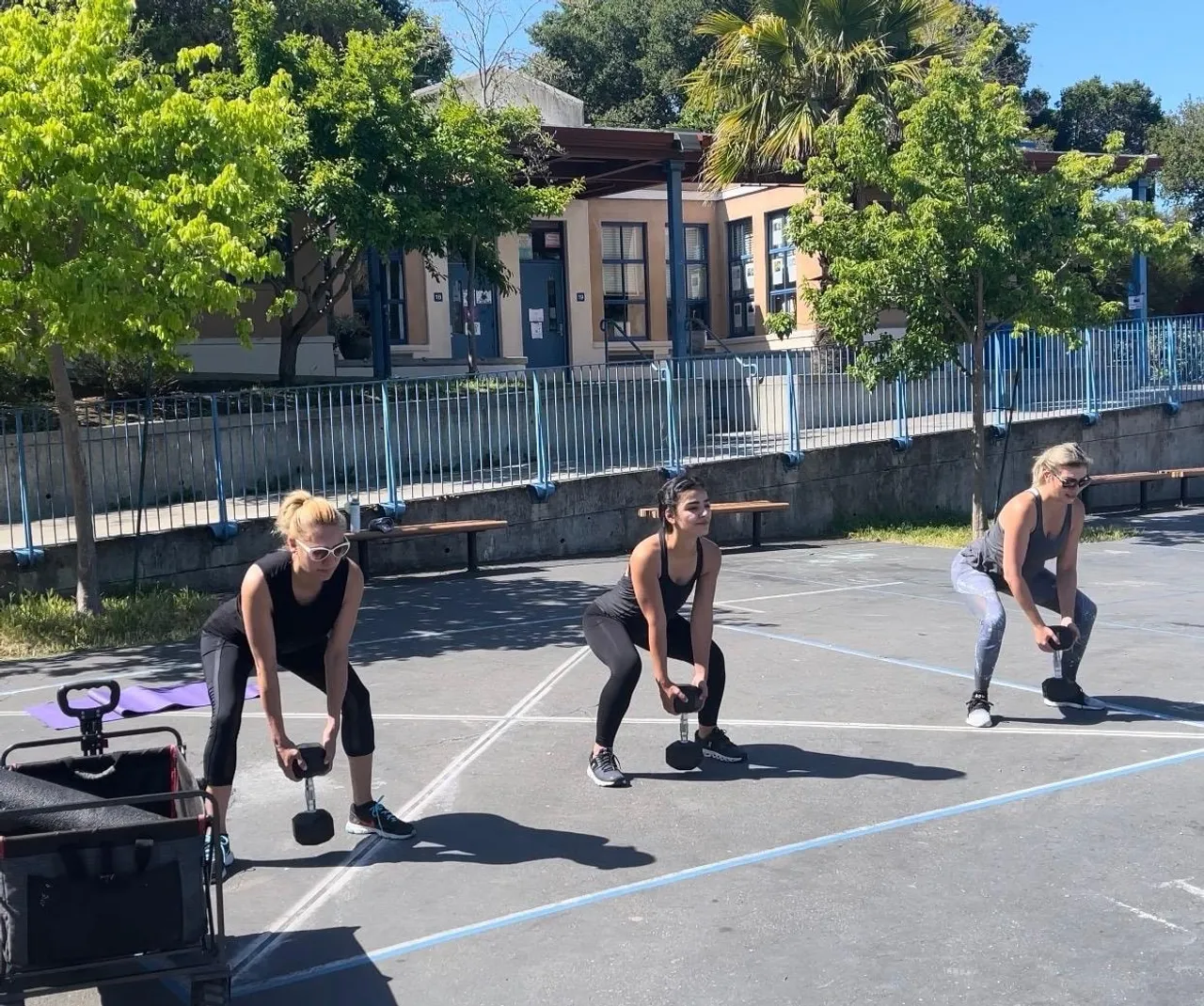
- Squats and sit-to-stands. They load the hips and legs and carry straight over to getting out of a chair.
- Deadlifts and hip hinges. Done with a neutral spine, these load the hips and the whole back side of the body. They are the real-life lift we use to pick up a grandchild or a bag of groceries.
- Rows and presses. Pulling and pushing load the upper body and teach the back to hold a tall posture.
- Carries. Walking with a weight in each hand loads the spine and the hips, and it builds grip.
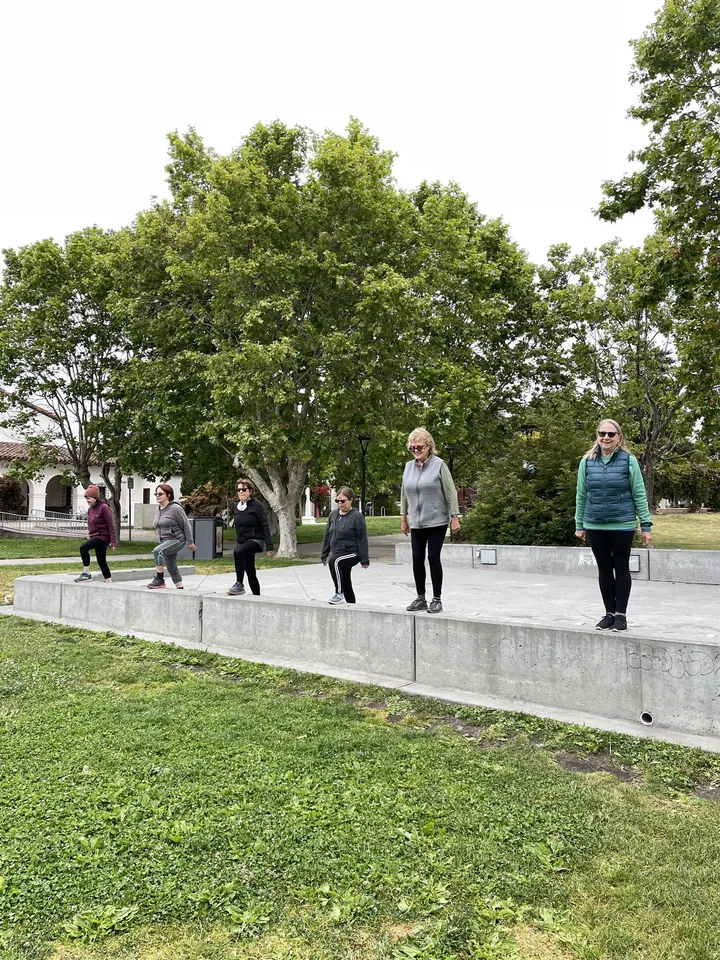
- Step-ups and heel drops. Small, controlled impact, scaled to what your body is ready for.
The recipe is simple. Pick a weight that feels challenging by the last few reps, keep the form clean, train two or three days a week, and then add load slowly over time. The slow part is the whole trick. Bone adapts over months, not weeks, so consistency beats intensity.
What to Avoid If You Already Have Low Bone Density
This is where good coaching matters. If you have been diagnosed with osteopenia or osteoporosis, some movements carry real risk, especially for the spine. These usually need to be removed or changed:
- Crunches, sit-ups, and toe touches that bend the spine forward under load.
- Heavy twisting, like a loaded torso rotation or a hard golf-style swing.
- High-impact moves you are not ready for, like jumping when you have not built up to it.
None of that means you stop training. It means the program gets built around your results instead of a generic class. If you are working with a condition, my post on training safely with an injury or chronic condition explains how I approach it.
Food and Your Doctor Are Part of This
Training is the signal, but bone also needs the raw material. Enough protein matters, and I wrote about it in Protein After 60. Calcium and vitamin D matter too, but how much you need depends on your diet, your labs, and your medications, so that one is a conversation for your doctor.
While you are there, ask whether a bone density scan makes sense for you. Women 65 and older are typically screened, and anyone with risk factors like a family history, a past fracture, long-term steroid use, or a small frame should raise it earlier. It is a painless test, and the answer helps shape the plan.
This is general guidance, not medical advice. If you have osteoporosis, have had a recent fracture, or have had spine surgery, get your doctor’s clearance before starting a new program, and tell me about it on day one.
Let’s Build Bone You Can Count On
October is a nice time to start. The heat has finally let up, the routines are settling in, and there are still a couple of months before the holidays. Bone is slow to change, which is exactly why the best day to begin is now.
If you want to know where you stand and what a safe, progressive plan looks like for you, I would be glad to talk it through, in person or online. Book a free intro call and we will start there.
Ready to train with Dario?
Book a free intro call and tell me your goals, or call me directly. We will find the right fit for you.